A Digital Twin Must Know Where It Stops
AI digital twins technology, applications, and implications for communication beyond death.
Original episode title: The Wild World of AI "Digital Twins," with Querlo CEO Francesco Rulli
Guest
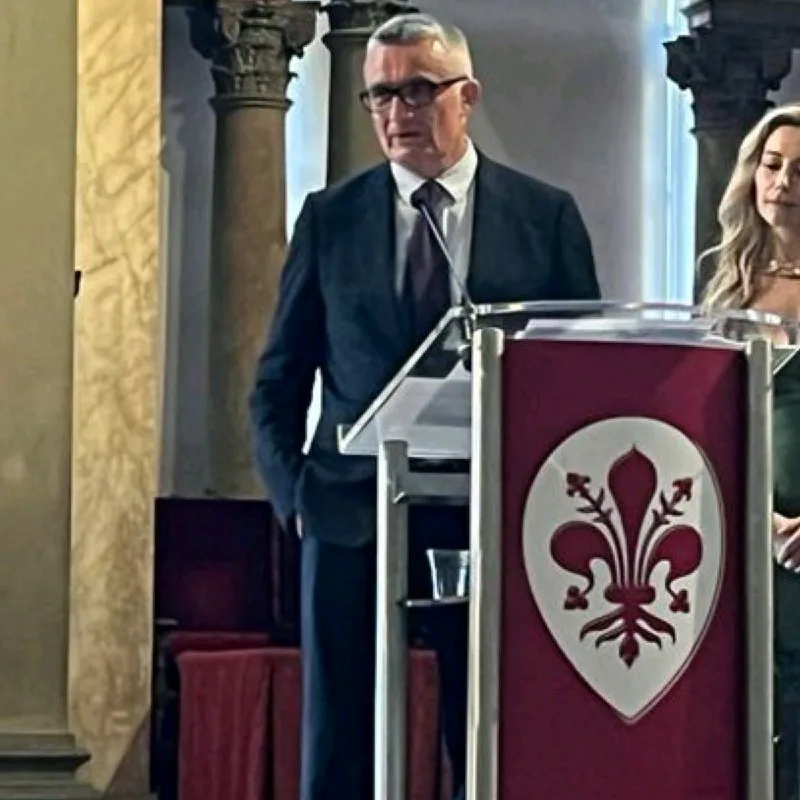
Francesco Rulli
Founder and digital-identity builder
Francesco Rulli is founder and CEO of Querlo, an AI company that develops conversational systems and digital-twin applications. He has explored how people might use AI representations for communication, memory, and legacy, while also addressing the emotional and ethical questions raised by simulating a person’s presence.
Turns the digital-twin idea into a boundary problem: what a system may know, say, preserve, invent, and continue on someone’s behalf.
 Watch on YouTube ▶
What this conversation is really about
The episode begins with a digital interface to a person’s knowledge and preferences, then reaches a harder question: what happens when that interface speaks for someone, preserves memory, or continues after death? Francesco Rulli’s examples make the concept tangible, but the durable argument is about authorization. A fluent personal system can retrieve, route, and generate while also inventing a biography, exposing private material, or outrunning the consent that created it. The value of the twin therefore depends less on resemblance than on provenance, correction, inheritance, and a visible boundary around representation.
From the conversation
The argument in focus
Francesco Rulli
Founder and digital-identity builder
Francesco Rulli is founder and CEO of Querlo, an AI company that develops conversational systems and digital-twin applications. He has explored how people might use AI representations for communication, memory, and legacy, while also addressing the emotional and ethical questions raised by simulating a person’s presence.
Turns the digital-twin idea into a boundary problem: what a system may know, say, preserve, invent, and continue on someone’s behalf.
Evidence status
Demonstration
A product builder describes and demonstrates digital-twin concepts while extending them into proposed uses for memory and communication. Vivid capability does not establish accuracy, authorization, or durable deployment.
Boundary map
Where the system stops
- What the system handles
- Retrieval, conversational access, contact routing, preference representation, and generated responses based on an assembled personal record.
- What remains human
- Authorization, source correction, privacy boundaries, inheritance decisions, representation rights, and the power to retire the system.
- What remains open
- Whose consent governs a digital representation after the original person can no longer inspect or correct it?
Ideas worth carrying forward
- A convincing imitation is not evidence that a representation is authorized or accurate.
- Personal systems need source provenance and correction paths, not only personality.
- Consent must cover retention, inheritance, and posthumous use.
- Every digital identity needs a revocation and retirement mechanism.
What this changes Monday
For any system that represents a person, list its approved sources, prohibited topics, correction process, retention period, and who can shut it down. Separate retrieval of a person’s record from generation in that person’s voice. If the owner cannot inspect what the system knows and others cannot tell when it is generating, the representation is not ready for consequential use.
Original episode notes
You can now use AI to create a digital clone, or "digital twin" of yourself or loved one or anyone, really. Why would you do this? What's the benefit? And why do some digital twin enthusiasts view the tech, essentially, as a way to cheat death?
There's no better expert on digital twins than Francesco Rulli, founder and CEO of Querlo, an AI company that provides services to clients like Microsoft and IBM and Pepsi.
Francesco has created his own digital twin.
He shares how and why he did it (4:40), he opens up with candor and vulnerability about how, he hopes, he can use digital twins to communicate with his deceased parents (11:00), he predicts when this will all become a reality (17:00), he responds to the critics who say "this is all too creepy" (20:00), and provides some wider AI predictions (24:00).
You can meet Francesco's digital twin at:
https://www.francescorulli.com
You can learn how to create your own digital twin through Querlo at:
https://www.querlo.com/digitaltwin