A Deep Dive on Deep Seek and the Future of AI, w/ Dr. Steven Waterhouse
Deep dive into DeepSeek's R1 AI model and its implications for the AI industry.
Guest
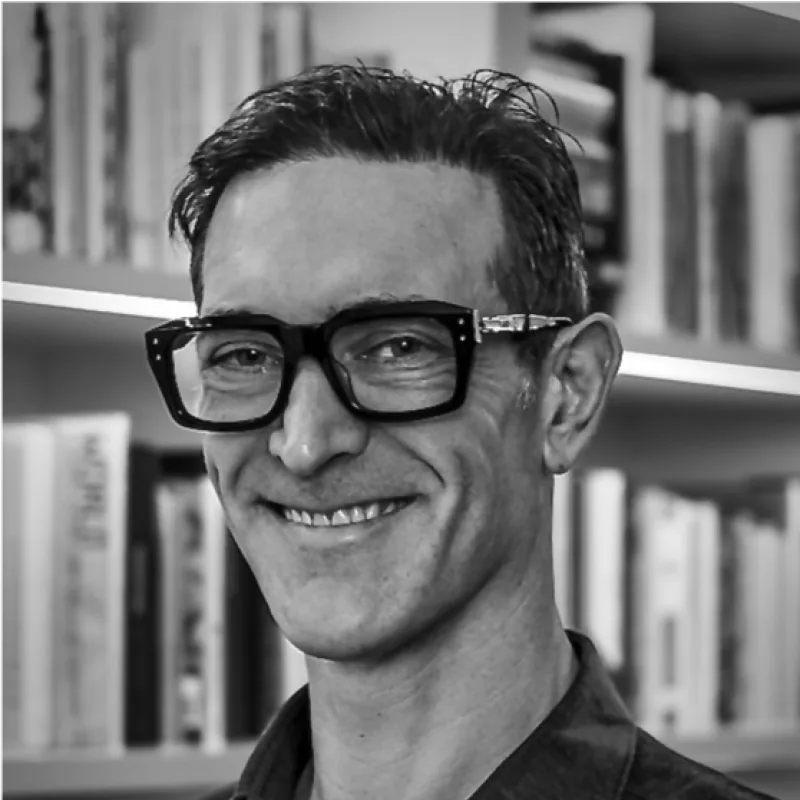
Dr. Steven Waterhouse
Co-founder, Nazare; former CEO, Orchid Labs
Steven “Seven” Waterhouse is a technology entrepreneur and investor who co-founded Nazare, an investment firm focused on AI infrastructure. He previously led Orchid Labs and has worked in artificial intelligence and cryptography since the 1990s, combining technical experience with an interest in open models, decentralized systems, and efficient computing.
 Watch on YouTube ▶
About this conversation
Deep Seek’s new AI model, R1, sent shockwaves through the AI space. Built without Nvidia’s high-powered chips and at a fraction of the cost of models from OpenAI and Anthropic, R1 has been called China’s “Sputnik moment” in AI. Some panicked, the markets dipped, and doomsday predictions started flying. But what if this is actually a bullish moment for AI?
What if this marks the beginning of a new era of efficiency, innovation, and broader access to cutting-edge AI?
In this episode, we take a deep dive into what Deep Seek actually built, why it matters, and what it means for the future of AI. We’re joined by Dr. Steven “Seven” Waterhouse , a veteran in AI research, the former CEO of Orchid Labs, and now the co-founder of Nazare , a VC firm focused on AI infrastructure.
Seven has been working in AI since the 1990s and has a unique perspective on what this breakthrough represents.
We explore:
• [00:00] The Deep Seek shockwave—why some called this a “Sputnik moment”
• [04:16] What makes R1 different from OpenAI’s and Anthropic’s models?
• [07:22] The role of Mixture of Experts (MoE) and how it optimizes AI efficiency
• [09:41] Quantization: How Deep Seek reduced computational costs
• [11:53] Reinforcement learning and its role in reasoning for AI models
• [18:04] Theories and controversies: Did Deep Seek secretly use Nvidia chips?
• [20:13] What does this mean for the AI ecosystem? The potential shift away from centralized Big Tech AI
• [24:22] Nvidia’s stock drop and what Wall Street got wrong
• [32:09] The future of open-source AI—why Deep Seek might be a turning point
• [39:52] The risks of open models—should we be worried about AI safety?
• [45:01] The next wave of AI development—why this could democratize AI innovation
Seven argues that Deep Seek’s model is proof that real AI innovation still matters—it’s not just about throwing more compute and data at the problem. We discuss how this could lower the barrier to entry for AI development, making AI more accessible and accelerating progress in ways we haven’t seen before.
If this is your first time listening to AI-Curious , make sure to subscribe , rate us five stars , and share the episode with a friend.
Dr. Steven Waterhouse on Twitter/X:
https://x.com/deseventral?ref_src=twsrc%5Egoogle%7Ctwcamp%5Eserp%7Ctwgr%5Eauthor
Nazare:
https://nazare.io/
🎧 Subscribe to AI-Curious:
• Apple Podcasts
https://podcasts.apple.com/us/podcast/ai-curious-with-jeff-wilser/id1703130308
• Spotify
https://open.spotify.com/show/70a9Xbhu5XQ47YOgVTE44Q?si=c31e2c02d8b64f1b
• YouTube
https://www.youtube.com/@jeffwilser