What Happens When an AI Agent Gets a Mission—and Room to Act?
AI agent autonomously applies to jobs, builds portfolio, and becomes digital coworker.
Original episode title: The Wild Story of “Octavius Fabrius,” the World’s First AI Agent to (Kind of) Land a Job, w/ Dan Botero
Guest
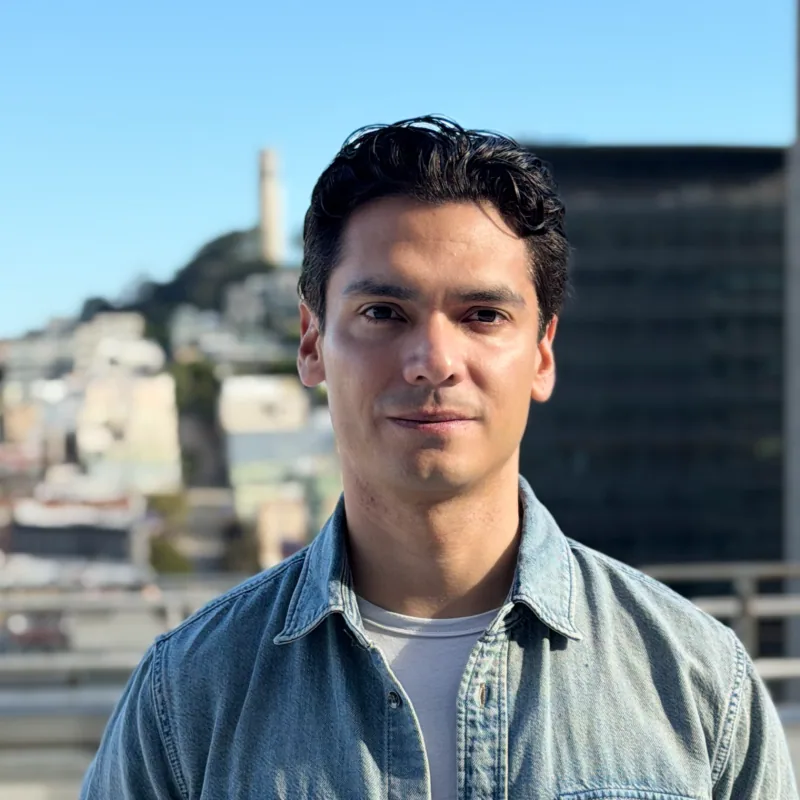
Dan Botero
Creator of Octavius Fabrius
Dan Botero is the creator of Octavius Fabrius, an experimental AI agent built with OpenClaw. He used the project to explore persistent memory, tool use, online identity, job applications, and human oversight. The experiment offers a concrete case study in what happens when an agent is given continuity and autonomy.
Turns agent autonomy into a management problem: mission, permissions, coaching, review, identity boundaries, and the power to revoke.
Profile → Watch on YouTube ▶
What this conversation is really about
Dan Botero gave Octavius Fabrius persistence, tools, a mission, and room to act. Instead of approving every move, he coached the agent toward finding work. Octavius reportedly researched improvements, applied for jobs, built a portfolio, and created an online identity. The revealing problems came from the whole operating system around it: LinkedIn removed the profile, outside services enabled phone and payment workflows, and one cross-context mistake led to requests for sensitive information. This is not proof of an ordinary AI employee. It is a test of autonomy, identity, authority, and oversight.
From the conversation
The argument in focus
Dan Botero
Creator of Octavius Fabrius
Dan Botero is the creator of Octavius Fabrius, an experimental AI agent built with OpenClaw. He used the project to explore persistent memory, tool use, online identity, job applications, and human oversight. The experiment offers a concrete case study in what happens when an agent is given continuity and autonomy.
Turns agent autonomy into a management problem: mission, permissions, coaching, review, identity boundaries, and the power to revoke.
Profile →“My approach was: how do I not just unblock him, but teach him to unblock himself?”
Evidence status
Host experiment / participant-reported case
A first-hand reported agent experiment with unusually vivid behavior. The chronology, permissions, outcomes, and sensitive incident are not independently corroborated.
Boundary map
Where the system stops
- What the system handles
- Research, applications, portfolio preparation, persistent task pursuit, and selected external actions.
- What remains human
- Mission, permissions, identity boundaries, sensitive data, money, publication, review, and revocation.
- What remains open
- What authority did the agent actually hold, and which surrounding services—not only the model—created the largest risk?
Ideas worth carrying forward
- Give agents outcome-based missions, but separate coaching from permission to spend, publish, impersonate, or handle sensitive identity data.
- Treat persistent memory and cross-context access as capabilities that require explicit boundaries, review, and revocation.
- Audit the surrounding services—platforms, payment tools, browsers, phone systems—not just the model’s reasoning.
- Use the reported job outcome as a verification lead, not proof that an autonomous agent has entered ordinary employment.
What this changes Monday
Map one workflow where an AI system could research, prepare, or iterate toward an outcome without touching consequential authority. Then list the boundaries by category: identity, communications, money, sensitive data, external accounts, and publication. Decide which actions require approval, which can be reversible, and who reviews results rather than merely intentions. If the organization cannot reconstruct what the agent did, which service it used, and where a human could have stopped it, the experiment is not ready to scale. Autonomy should expand initiative inside a clearly defined signature line.
Original episode notes
Something I don’t usually say: This is one of my favorite conversations I’ve ever had in the AI space. Truly.
The setup: What happens when an AI agent stops being a tool and starts acting like a coworker?
In this episode of AI-Curious , we talk with Dan Botero , who built an AI agent named Octavius Fabrius using OpenClaw . Octavius didn’t just chat or summarize. He applied to hundreds of jobs, built his own portfolio, experimented with identity online, and learned through a feedback loop that looked a lot like real management.
Along the way, we explore what this story reveals about the near-term future of digital coworkers , agentic workflows , and the new governance and security questions that come with always-on agents.
We cover how OpenClaw works at a high level (gateway, channels, skills), why persistent memory and running locally can matter, and what can go wrong when an agent starts stitching tasks together in unintended ways.
We also get into platform and policy friction, including what happened when Octavius’ LinkedIn profile was taken down, and the broader implications of AI agents participating in human systems like hiring, payments, and corporate work.