When AI Forecasts Become Self-Fulfilling (and Who This Hurts), w/ Carissa Véliz
An Oxford ethicist on how AI predictions become self-fulfilling prophecies in hiring, lending, and insurance — and the privacy stakes of predictive AI.
Guest
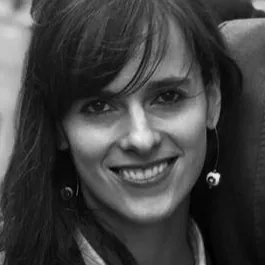
Carissa Véliz
Associate Professor, University of Oxford
Carissa Véliz is an associate professor at the University of Oxford’s Institute for Ethics in AI. A philosopher, she writes and teaches about privacy, technology, ethics, and political philosophy. She is the author of Privacy Is Power and Prophecy, Prediction, Power, and the Fight for the Future.
 Watch on YouTube ▶
About this conversation
What happens when an AI prediction does not just forecast the future, but helps create it?
In this episode of AI-Curious -- recorded on location at this year's TED conference -- we talk with philosopher and ethicist Carissa Véliz about AI ethics, AI privacy, predictive AI, and the hidden power of algorithmic decision-making.
We explore how AI systems used in hiring, lending, insurance, and other high-stakes settings can become self-fulfilling prophecies, shaping outcomes rather than simply measuring them.
We also examine the growing privacy risks of large language models and AI agents, especially as they gain access to more personal data, communications, and systems. Along the way, we discuss automated decision-making, surveillance, human autonomy, and why predictions about people are far more ethically fraught than predictions about things like the weather.
This conversation also goes beyond policy and into philosophy: how narratives about AI shape public thinking, why humor can be a response to technological power, and how individuals and companies can use AI responsibly without giving up judgment, control, or resilience.
If you are interested in AI ethics, algorithmic bias, AI privacy, AI agents, responsible AI, predictive algorithms, self-fulfilling prophecy, and the future of AI, this episode offers a clear and thought-provoking framework for understanding what is at stake.