Why AI Will (Probably) Never Become Conscious, w/ Neuroscientist Anil Seth
Will AI ever become conscious, or are we mistaking intelligence for inner life? In this episode of AI-Curious, we talk with neuroscientist Anil Seth about one of the biggest questions in artificial intelligence: whether AI can truly become conscious.
Guest
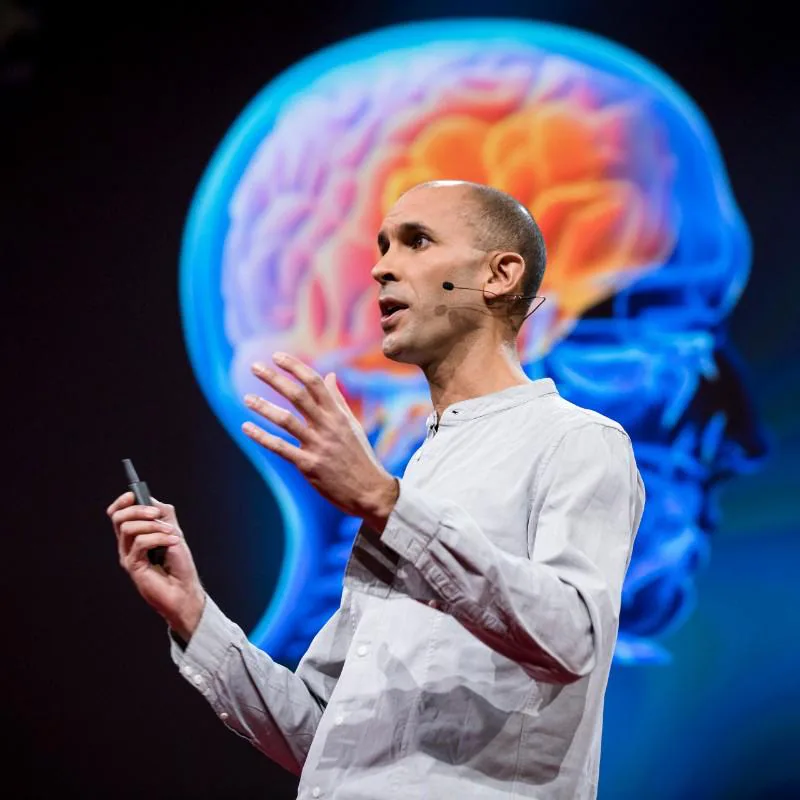
Anil Seth
Professor of Cognitive and Computational Neuroscience, University of Sussex
Anil Seth is Professor of Cognitive and Computational Neuroscience at the University of Sussex and Director of the Sussex Centre for Consciousness Science. His research investigates the biological basis of conscious experience and how perception, the body, and living systems shape our sense of reality.
 Watch on YouTube ▶
About this conversation
Will AI ever become conscious, or are we mistaking intelligence for inner life?
In this episode of AI-Curious, we talk with neuroscientist Anil Seth about one of the biggest questions in artificial intelligence: whether AI can truly become conscious. Anil is Professor of Cognitive and Computational Neuroscience at the University of Sussex, where he directs the Sussex Centre for Consciousness Science.
We explore why Anil believes today’s AI systems are not conscious, why language and intelligence are not the same as experience, and why humans are so quick to project minds onto machines. We also discuss his argument that consciousness may be deeply tied to living biological systems, rather than something that can simply be copied into silicon.
The conversation moves through neuroscience, philosophy, AI ethics, and the future of human relationships with machines. We talk about the cultural pull of Frankenstein, HAL, the singularity, and mind uploading, as well as the risks of assuming AI deserves rights if it only appears conscious.
Anil also explains why brain organoids and biological systems may raise more serious consciousness questions than today’s chatbots.
Finally, we look at why this debate matters now, especially as people form emotional bonds with AI companions and increasingly interact with systems that can seem empathetic, aware, and alive.